How much should an engagement ring cost? An amount you can spend and still feel good about a year later, because no single correct number exists. Anyone who gives you one without asking about your life is guessing. I can show you where the money in a ring actually goes, so the number you choose buys as much ring as possible.
I'm Karmen, a GIA-credentialed jeweler and Accredited Jewelry Professional in Austin. Before I started KLA, I was a Territory Manager for a diamond and gemstone manufacturer, so I've seen how jewelry is priced before it reaches a store. What follows is how I'd think about a first ring.
This page is general information, not financial advice. If a ring purchase touches bigger money decisions, talk with a qualified financial professional.
Why the salary rules don't hold up
The "three months' salary" rule was popularized by a De Beers advertising campaign in the 1930s. Even the older two-month version was only meant as a rough guide, and the industry no longer treats it as the standard.
The problem is simple. A formula based on income ignores everything else about your money: debt, rent, savings, a wedding, a house you're saving for. Two people with the same paycheck can have very different room in their budgets. A good jeweler works with your number. A good jeweler doesn't argue with it.
Be careful with "average cost" headlines too. A small number of very expensive rings pulls the average up. The median, the middle purchase, is a more honest reference point, and in 2021 it was well under half the average. If an average figure makes you feel behind, it's probably measuring someone else's ring.
How to set a budget that's actually yours
- List what's coming. Write down the big expenses on the horizon: the wedding, a honeymoon, a down payment, a business. Put the ring on the same list and rank everything by how much it matters to both of you.
- Pick a target and a ceiling. The target is what you'd like to spend. The ceiling is the most you'll spend for the right stone. Having both makes decisions faster.
- Decide how you'll pay. Many jewelry stores offer financing or layaway, and some layaway plans spread payments over months without interest. Read the terms closely. Interest can quietly make a ring cost more than it should.
- Leave room for the extras. Insurance, engraving, rush timelines and resizing can all add to the total. When you work with me, sizing and fully insured shipping are complimentary, and custom pieces arrive with an appraisal for insurance. Ask any jeweler what's included.
- Budget the bands now. More on this below. They're easier to plan alongside the engagement ring than to add later.
Where the money goes: the center diamond
In most engagement rings, the center diamond drives most of the price. Its cost comes down to the 4Cs: carat, cut, color and clarity. Together they set how rare a diamond is, and rarity sets the price.
Carat weight
Price rises exponentially with carat weight, not in a straight line, because larger diamonds are rarer. Prices also jump at "magic" weights like 1.00 ct and 1.50 ct. A 0.97 ct or 1.47 ct stone can cost noticeably less and look essentially the same on a hand. If you have a size in mind, ask to see stones just under it.
Cut
Cut is the one place I'd tell you not to cut corners. A well-cut diamond returns light in a way a poorly cut one can't. A slightly smaller stone with an excellent cut often looks more striking than a larger stone with a mediocre one. If size matters most to you, you can usually go lower on color and clarity before you give up cut.
Color
On the GIA scale, D through F are colorless and cost the most. G through J show slight color and cost less. G and H are often the sweet spot because they look near-colorless face-up, especially once they're set.
Clarity
Flawless and Internally Flawless are the top grades and carry the highest prices. VS2, and sometimes SI1, are often good value because they usually have no inclusions you can see without magnification. "Usually" is the key word, so look at each stone individually. That's why I show you the GIA report and video of the actual diamond before you approve it.
Natural vs. lab-grown: what the same budget buys
This is often the biggest single decision for your budget. For the same money, a lab-grown diamond can be roughly twice the carat weight of a natural one. In some comparisons the gap is even wider.
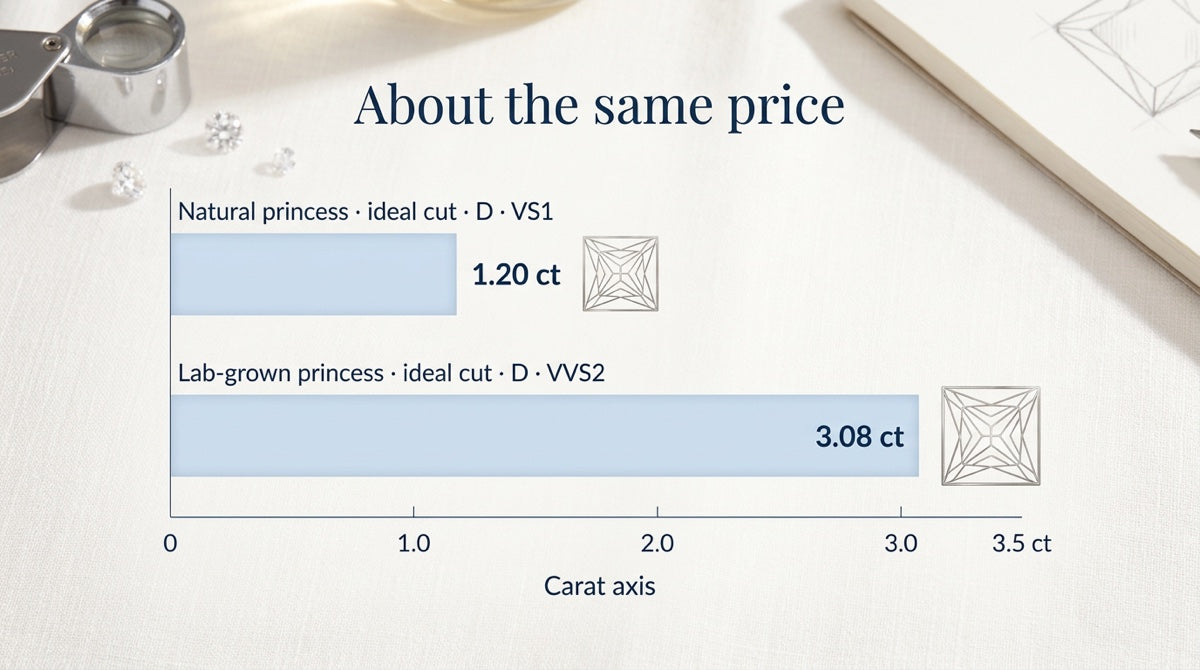
Size isn't the only consideration. I work with both and walk through the differences in cost, resale and sourcing without steering you toward either one. Some people care about a stone formed in the earth. Others would rather put the money toward size or a better setting.
On resale: no diamond bought at retail should be treated as an investment. Lab-grown diamonds generally have far weaker resale value than natural ones, though natural diamonds also typically resell for well below their retail price. If you might sell the ring someday, factor that in. If it's staying on your hand, it may matter less.
Either way, every center stone I place is GIA certified, and you review the report before you say yes.
Shape: looking bigger for the same money
Round brilliants are often the most expensive shape. They're the most popular, and cutting them loses more of the rough crystal. Fancy shapes like oval, cushion, princess and marquise often cost less per carat. Many elongated shapes also look larger face-up than a round of the same weight.
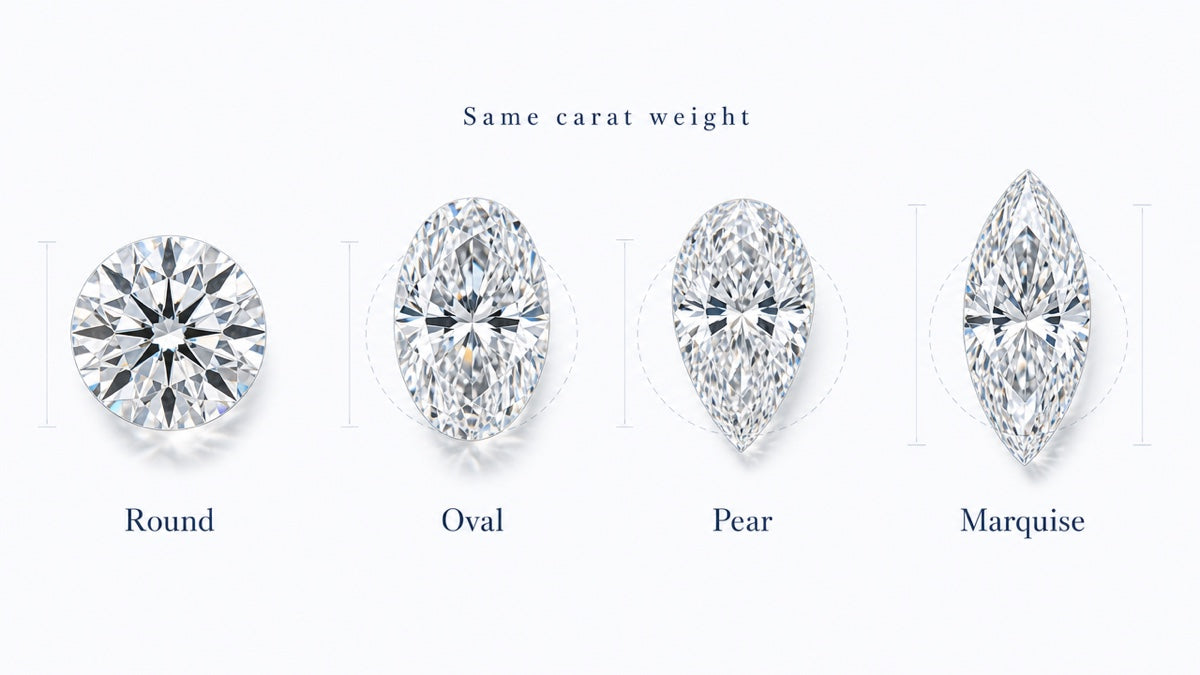
If your partner already loves a particular shape, tell me early. Shapes aren't priced equally, and knowing the shape lets me match options to your number before we spend time on stones that won't fit.
Metal and setting costs
A simple solitaire is usually the most affordable setting, and it lets more of your budget go to the center stone. Halos, three-stone designs and pavé bands cost more because they add stones and labor. Details like milgrain, filigree and engraving add a little more.
For metal, platinum generally costs the most because it's rare and dense. Gold in 14K or 18K balances cost and durability, and I work in yellow, white and rose. Metal color also affects how the diamond's color reads. Yellow gold tends to be forgiving of a slightly warmer stone, so you might choose a lower color grade there than you would in white metal.
Where retail markup comes from
Some of a ring's cost is real work: sourcing the stone, cutting it, grading and certifying it, casting the setting and setting the stones by hand. Any honest price includes those.
A traditional store adds more on top. There's rent on a showroom, cases full of inventory that has to be bought and financed before it sells, and a sales staff. That overhead shows up in the price you pay.
I run KLA without a storefront, a large inventory or sales staff. That lets me price without the traditional retail markup, and it means I'm sourcing for your ring instead of trying to sell what's in a case.
To compare quotes fairly, wherever you shop:
- Match the report, not just the grades. Same lab, carat, color, clarity and cut. Ask for the report number and look it up yourself.
- Match the metal and the setting style.
- Ask what's included: appraisal, sizing, insured shipping, and any future maintenance or checks.
- Ask to see video of the actual stone, not a stock image.
Don't forget the wedding bands
Many first-time buyers spend the whole budget on the engagement ring and then discover the bands. Plan for one or two bands from the start, depending on whether both of you will wear one.
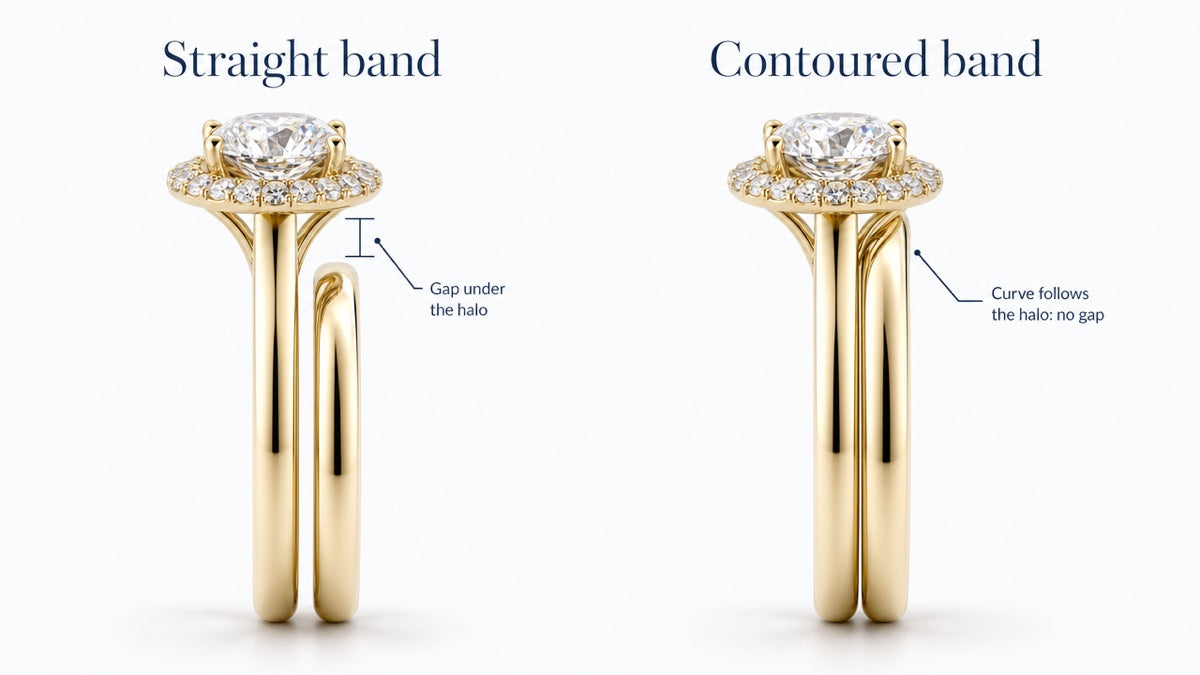
Design matters here too. Low-set rings and halos can leave an awkward gap against a plain straight band. You may need a contoured band, or one designed alongside the engagement ring, so the two sit together. As one example from my shop, the Pavé Half-Eternity Band ($1,299, 0.50 ct total weight) has stones across the top half only. That makes it easier to resize, and it sits flush against an engagement ring.
What a budget conversation with me looks like
Consultations are complimentary, in person in Austin by appointment or over video from anywhere. Here's what I'll ask:
- Who it's for, and whether it's a surprise
- A budget range, even a rough one
- Any date you're working toward
- Pictures of anything you love
You don't need to know setting names or your partner's ring size. You also don't need to have decided between natural and lab-grown, and you don't need to be ready to buy.
After we talk, I source GIA certified options within your number and show them to you side by side. I'll be honest about the trade-offs, including the places where spending more won't make a difference anyone can see. You review each stone's report and video before approving it. Then you see renderings of the design, and nothing is made until you say yes.
Expect about two weeks for the consultation and stone selection, then four to six weeks from design approval. If you have a stone from a family piece, bring it. Reusing it can change your budget a lot, and I'll tell you honestly what can be reset. You can see the full process on the custom design page, browse engagement rings in the shop, or read more common questions.
When you have a number, even a loose one, send it to me with your pictures. It's four questions and takes about two minutes. I read every request myself and reply within 24 hours with what's possible at your budget.